
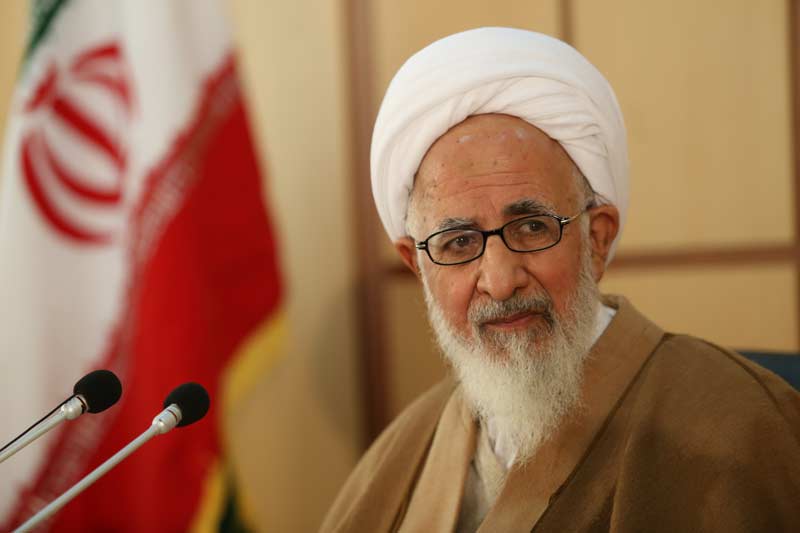


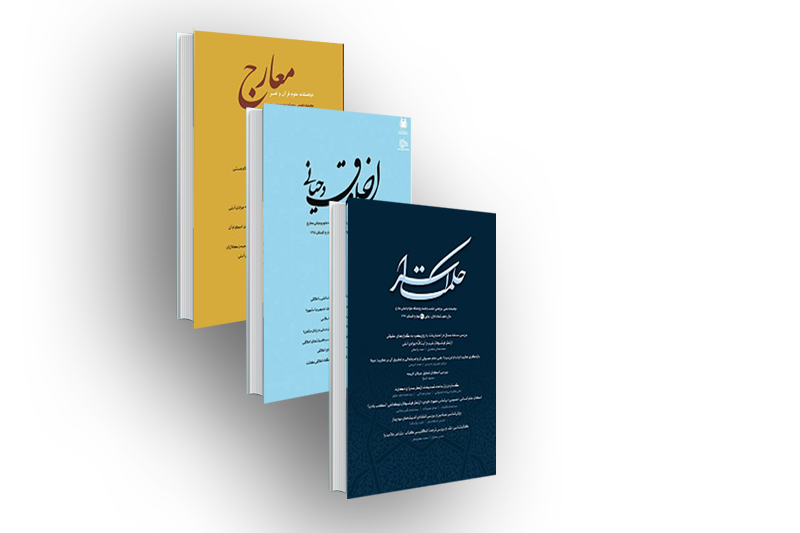


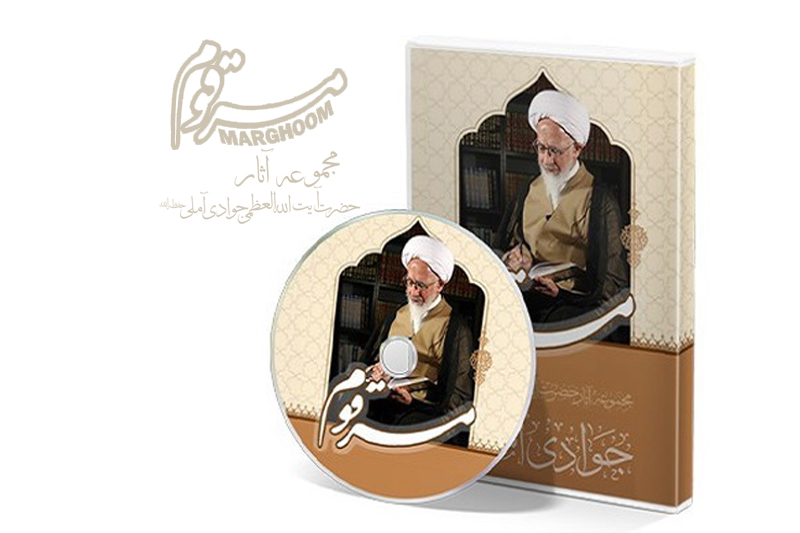
 Esra Publishing Center, the exclusive publisher of Ayatollah Javadi Amoli's works, started working in 1993; Among the missions and duties of the center are the production of written works with the desired and standard quality, fast and timely supply at the right price and supporting the products, providing easy, fast and low-cost access to the products for the domestic and foreign audiences, attending domestic and foreign international exhibitions, ….

The website of Isra foundation reports: In his book entitled “Imam Mahdi: The Living and the Promised Imam”, Grand Ayatollah Javadi Amoli addresses the necessity and manner of the Shias’ relationship with Imam al-Mahdi (ʿa) as follows:
“The ordinary and rational life of mankind depends on a real connection with the revealed knowledge in the Holy Quran, for revelation is the sole life-giving factor for humanity, and adherence to its rulings and teachings paves the way for attaining a rational and desirable life: “Answer God and the Prophet when he calls you to that which gives you life.”[1] “Whoever acts righteously, male or female, while being a believer, We shall surely grant them a pure life.”[2]
The Pure Progeny of the Prophet (ṣ), which is one of the Two Weighty Legacies left by the Prophet of God (ṣ), stands alongside the Quran and is inseparable from it. Therefore, whatever rulings and attributes are established for the Quran are likewise established for the Pure Household. Accordingly, connection with the Imam al-Mahdi (ʿa) is life-giving and ensures a rational and desirable existence.
The Prophet of God (ṣ) declared, as previously discussed, that failing to recognize and accept the Wilayah of the Infallible Imam of one’s time causes one to die in ignorance. Thus, he whose absence brings about a death in ignorance, his presence ensures a rational life. Likewise, one who truly understands Wilayah continually places himself in the position of being connected to the Infallible Imam of his age.
Establishing a connection with the exalted station of Wilayah and linking one’s soul and heart to Imam al-Mahdi (ʿa) not only secures a rational life but also eliminates one’s deficiencies. This is because Imam al-Mahdi (ʿa) is the true Kaʿbah and the reality of the Kaʿbah. The earthly Kaʿbah stands in alignment with the Bayt al-Maʿmūr, and that House corresponds to the Divine Throne.
A particular angel was commissioned to construct the Bayt al-Maʿmūr so that those angels who initially failed to recognize the human being’s station as God’s vicegerent, and thought their own glorification and sanctification of God sufficient for attaining Divine vicegerency, might circle it in circumambulation, thereby making up for their former misunderstanding. It was only then that, by God’s instructions, they were able to comprehend the lofty station of the Complete Man, and by circumambulating that station, they were able to compensate for their previous failure.
Similarly, the construction of the Kaʿbah is for circumambulation in order to compensate for shortcomings and failures, particularly negligence, lapse, or disobedience to Man’s Station of Divine Vicegerency.[3] Thus, the greatest awakening for heedless pilgrims and inattentive circumambulators is to rectify ignorance and compensate for negligence concerning self-knowledge and recognition of the lofty station of the Perfect Man and the Divinely-appointed Vicegerent of the present time, His Holiness Imam al-Mahdi (ʿa), so that, like the angels, their circumambulation may be accepted and their striving acknowledged.
The Manner of Establishing a Relationship with Imam al-Mahdi (ʿa)
Direct and unmediated presence before Imam al-Mahdi (ʿa) requires special qualifications and worthiness; thus, only a rare few among the sincere monotheists are granted the opportunity of being in his sacred presence.
Moreover, any extraordinary act or miracle performed by an unknown individual who, by such acts, benefits others ultimately flows from the effusive source of blessings in this world, that is Imam al-Mahdi (ʿa). However, it is not necessarily the case that such an unknown person is the Imam (ʿa) himself. Rather, the Imam (ʿa) has righteous disciples who, by his command, solve the problems of others and serve as intermediaries through whom his grace reaches them.
What is necessary and accessible for all, however, is the establishment and preservation of a spiritual connection with him, achieved through observing the etiquette of presence and maintaining a living awareness of his authority. Performing recommended acts and righteous deeds on his behalf and dedicating their otherworldly rewards to the pure souls of the Ahl al-Bayt (ʿa) is among the best means of maintaining such a connection; the most refined state while doing such acts on behalf of the Ahl al-Bayt (ʿa) is that one should not request anything in return from the Imam (ʿa), for such expectation diminishes the value of the deed.
This is because our requests are limited by our understanding, and our understanding is veiled by our desires, hence, what we seek is correspondingly limited. It is therefore better, in accordance with proper etiquette, not to propose specific requests to him, for he is one of those “whose very disposition is generosity”.[4]
It is fitting, then, that we await his bestowal, for whatever he grants by virtue of his noble disposition is enduring. This does not mean that if a person has a particular problem, he should not present it to his Imam and seek his assistance. Rather, it means that in performing righteous deeds on his behalf, one should not seek one’s personal demands, so that they may grant according to their own grace not according to the limited scope of our expectations.
When they give in accordance to their own lofty station, they grant both capacity and fulfillment. Sometimes, though the gift is given to an individual, its manifestation benefits an entire society. For example, Imam al-Ridā (ʿa) told his disciple Zakariyyā ibn Ādam, when he sought permission to leave Qom, to remain there, for by his presence God would avert punishment from the people of Qom, just as He had averted punishment from another region by the blessing of his father’s resting place.[5] This is an example of a grace bestowed upon an individual the blessing of whose presence then flows through an entire city, even after their passing.
Among the other etiquettes in relating to Imam al-Mahdi (ʿa) is standing up in reverence at the mention of his blessed name, a long-standing tradition among the devoted lovers and followers of the House of the Prophet (ṣ).
[1] Al-Anfāl: 24.
[2] Al-Naḥl: 97.
[3] Al-Kāfī, vol. 4, pp. 187-188.
[4] Derived from Ziyārat al-Jāmiʿah al-Kabīrah, wherein the Imams (ʿa) are addressed as follows: “Beneficence is your customary practice, and generosity is your common disposition.” (Al-Balad al-Amīn, p. 302; Man Lā Yaḥḍuruhu al-Faqīh, vol. 2, p. 615.)
[5] Al-Ikhtiṣāṣ, p. 87.